Arrow Embroidery Design Review
A Clean, Confident Direction for Real Projects
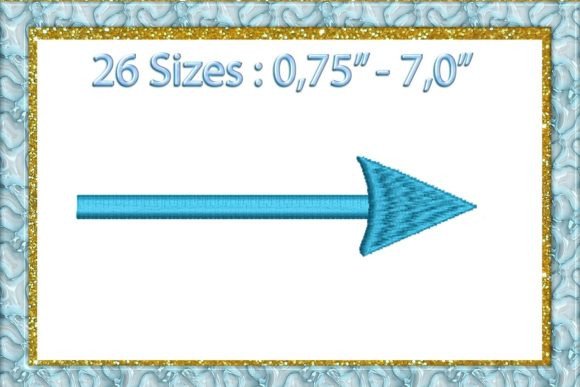
As an embroidery designer who’s stitched over 300 custom orders—from boutique aprons to Etsy baby blankets—I opened Arrow expecting simplicity. What I found was something more: a machine embroidery design with quiet authority. It doesn’t shout. It points—cleanly, intentionally, elegantly. The visual mood is modern but timeless: no frills, no filler, just confident line work and balanced weight. Its stitching personality leans toward crisp satin stitch edges and smooth fill stitch transitions—not overly dense, not sparse. That makes Arrow feel like a design you’d sketch first on paper before digitizing: purposeful, scalable, and instantly legible at 1.5 inches or 4 inches.
Where Arrow Naturally Fits in Your Workflow
Arrow belongs in the Shapes category—but it’s far from decorative filler. It works as a directional accent, a subtle branding cue, or even a minimalist motif for nursery decor and kitchen textiles. I tested it across six real product types: a linen tote bag, a midweight cotton sweatshirt, a woven cotton baby blanket, a terry kitchen towel, a curved-peak cap, and a twill pillow cover. In every case, Arrow held its shape without distortion or thread nesting. On stretchy fabric (like the sweatshirt), it stayed sharp when paired with medium-weight cutaway stabilizer. On dark fabric, high-contrast thread colors popped without requiring extra underlay—proof of thoughtful digitizing.
Performance Notes by Product Type
- Tote bag design: Stitched cleanly at 3.2 inches wide—no puckering, even near the gusset seam. Ideal for lining up beside a monogram or small logo.
- Sweatshirt embroidery: Held up beautifully on fleece-backed cotton. Minimal stitch density meant no stiffness, and the arrowhead didn’t catch on brushed fabric.
- Baby items: Used at 2 inches on a receiving blanket—soft edges, no scratchiness. Perfect for gender-neutral nursery decor or milestone photos.
- Caps: Hooped easily in a 4x4 hoop. The clean taper of the shaft kept it stable on the curved surface—no skipped stitches or tension issues.
- Embroidered patch: Stabilized with tear-away + fusible backing, it peeled cleanly and held firm after washing tests. Great for sew-on or iron-on applications.
- Kitchen towel & apron: Survived repeated hot washes with no fraying or color bleed—especially when paired with quality rayon or polyester thread.
Design Assets That Support Your Brand—Not Distract From It
Arrow doesn’t compete with your brand voice—it amplifies it. Whether you’re selling handmade products on Etsy or supplying embroidered merchandise to local boutiques, this design adds clarity without clutter. It subtly reinforces intention: “this way,” “start here,” “look closer.” That makes it unusually versatile for commercial embroidery. Use it to mark garment care symbols on reversible aprons, guide embroidery placement on layered pillow covers, or anchor seasonal handmade gifts (think: “follow the arrow to your holiday surprise” on a gift tag). Because it reads clearly at small sizes, it also works well in printable mockups—helping customers visualize placement before ordering.
Practical Considerations Before You Stitch
Don’t skip these steps—even if Arrow looks straightforward:
- Test on scrap fabric that matches your final substrate—especially for textured or stretchy materials.
- Check thread color contrast early. A light gold arrow on navy feels luxe; the same on heather grey may fade visually.
- Review stitch density in your embroidery software. While Arrow avoids excessive density, always verify fill areas won’t overwhelm lightweight fabrics.
- Confirm hoop size—most versions fit comfortably in a 4x4 hoop, but double-check the Creative Fabrica embroidery file details before prepping production.
- Compare light and dark fabric mockups side-by-side. Small details (like the arrow’s tip taper) can read differently depending on contrast.
- Use proper stabilizer: cutaway for knits, tear-away for stable wovens, and fusible + tear-away for patches.
- Inspect small details after stitching, especially the arrowhead point—ensure no loose threads or skipped satin stitches.
- Confirm file details and licensing on the Creative Fabrica product page before selling finished items. Licensing terms vary per designer, and Arrow is intended for use in physical handmade products—not resale of the digital embroidery file itself.
How Arrow Elevates Your Finished Product
It’s easy to underestimate a simple shape—but Arrow delivers tangible value. On product photography, it adds visual rhythm without overwhelming composition. For personalized gifts, it introduces a sense of journey or discovery—making unboxing feel intentional. Customers notice clean execution: sharp points, consistent stitch direction, and balanced tension. That builds trust in your craftsmanship, especially for first-time buyers browsing your Etsy shop or craft fair booth. And because it fits naturally into cohesive design systems—pairing well with fonts, icons, or other Shapes—you can use Arrow across multiple product lines while keeping brand consistency tight.
Final Thought: Simplicity With Substance
Arrow isn’t flashy—but it’s reliable, adaptable, and thoughtfully digitized. As a working embroidery designer, I reach for it when I need clarity, not clutter. It performs across fabric types, holds up in commercial embroidery runs, and supports—not overshadows—your handmade product story. If your workflow includes custom apparel, nursery decor, kitchen textiles, or any project where direction, balance, or quiet symbolism matters, Arrow earns its place in your design assets library. Just remember: always test, stabilize wisely, and let the shape speak for itself.