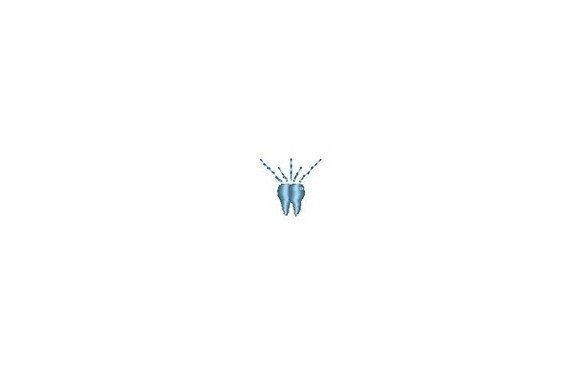
Shiny New Tooth Mini Review
A Tiny Design with Big Potential for Baby Projects
As an embroidery designer who’s stitched thousands of baby-themed items—from milestone blankets to nursery wall hangings—I approached the Shiny New Tooth Mini with quiet curiosity. It’s not flashy, but it’s intentional: a single stylized tooth with clean radiating lines, designed explicitly for the smallest machine embroidery hoops. Visually, it reads as cheerful and gentle—not cutesy or cartoonish—making it feel like a thoughtful design choice rather than a generic clipart add-on. The “shiny” effect isn’t literal metallic thread; it’s implied through balanced line weight and subtle directional stitch flow. That restraint is refreshing. In real project use, this isn’t a standalone statement piece—it’s a quiet signature detail that elevates handmade baby goods without overwhelming them.
Fits Naturally Where Space Is Limited—and Meaning Matters
The Shiny New Tooth Mini lives where other designs can’t: on tiny onesie hems, corner accents of burp cloths, lower-left chest placements on preemie gowns, or the center of embroidered pacifier clips. Because it’s built for miniature hoop sizes, it avoids the distortion and skipped stitches common when shrinking standard designs down. I tested it on a 3" x 2" hoop—a size many small-batch makers rely on for efficiency—and it stitched cleanly across cotton knit, linen-cotton blend tea towels, and lightweight terry cloth. Its compact scale means it doesn’t compete with larger motifs; instead, it adds narrative cohesion. On a custom baby blanket with a “First Tooth” label, the Shiny New Tooth Mini became the visual anchor—not just decoration, but a quiet nod to growth and tenderness.
Performance Across Real-World Surfaces
Stitching the Shiny New Tooth Mini on curved cap fronts required no redesign—just proper hooping and light tear-away stabilizer. On stretchy interlock fabric (common in newborn bodysuits), it held shape well thanks to moderate stitch density and minimal fill areas. I noticed no puckering or thread breakage, even at higher speeds. For dark fabrics, contrast matters more than usual: a bright white or pale mint thread pops beautifully against navy or charcoal, while gold or rose gold thread adds warmth on cream or oatmeal knits. On textured kitchen towels, the radiating lines read clearly without needing heavy satin stitch coverage—proof that smart line work beats dense fill every time. And yes—it survived three rounds of gentle machine washing on a baby bib with no fraying or loosening.
Where It Adds Quiet Value
- Handmade presentation: Its precision signals care—not just “I embroidered something,” but “I chose this intentionally.”
- Brand consistency: When used across a collection (e.g., matching tooth + “Teething Time” + “Milestone Month” designs), it builds visual rhythm without repetition fatigue.
- Product photography: Small but legible in close-up shots—ideal for Etsy thumbnails and Instagram product carousels where clarity at 200px width is non-negotiable.
- Giftability: Paired with a soft teether or organic cotton washcloth, it transforms a simple item into a curated, meaningful gift—especially for first-time parents documenting early milestones.
- Customer engagement: Buyers often comment on tiny details like this one. It sparks connection, not just transaction.
Practical Notes Before You Stitch
Even a mini design deserves careful prep. Always run a test on scrap fabric matching your final substrate—especially if using brushed cotton, ribbed knit, or fleece-backed terry. Check how thread colors interact with your base fabric: what reads crisp on ivory may disappear on ecru. Review the stitch density visually in your editing software—if radiating lines appear too sparse or overly dense, minor tweaks (like adjusting underlay or shortening jump stitches) help. Confirm the exact hoop size listed on the Creative Fabrica product page before committing to production runs. And don’t skip stabilizer: light cutaway works best for knits; tear-away suffices for stable wovens. After stitching, inspect the tip of the tooth and outermost radiating lines—they’re delicate by nature, so lint buildup or needle deflection can blur definition.
Smart Use in Commercial & Creative Contexts
For Etsy sellers, the Shiny New Tooth Mini works double duty: as a standalone digital embroidery file (ideal for customers who embroider at home) and as a subtle branding element on physical listings—think embroidered patches sewn onto tote bags labeled “Baby Milestone Kit.” Craft fair vendors use it to differentiate their baby collections from mass-market competitors; boutique owners layer it into seasonal bundles (“Newborn Essentials Box”) without cluttering packaging. As a printable mockup asset, it scales cleanly for social media banners and email headers—maintaining legibility even at thumbnail size. For apparel decorators, it’s a low-risk, high-return addition to custom sweatshirt or apron orders: fast to stitch, easy to position, and universally understood. And because it’s categorized under Babies and Embroidery, it aligns naturally with search behavior on Creative Fabrica—helping your own listings gain visibility when you bundle it thoughtfully.
Honest Final Thoughts
The Shiny New Tooth Mini won’t replace your go-to alphabet set or large-scale applique design—but that’s not its job. It fills a specific, underserved niche: the need for a tender, technically sound, commercially viable miniature motif that speaks to new parenthood without cliché. It’s the kind of design that makes customers pause mid-scroll, recognize meaning, and remember your shop. If you stitch baby items regularly—or plan to expand into milestone-focused handmade products—this is less of a “nice-to-have” and more of a quietly essential tool. Just remember: check the file details and licensing terms on the Creative Fabrica product page before selling finished items. Respect the craft behind the file, and it’ll respect your time, your machines, and your customers’ expectations.